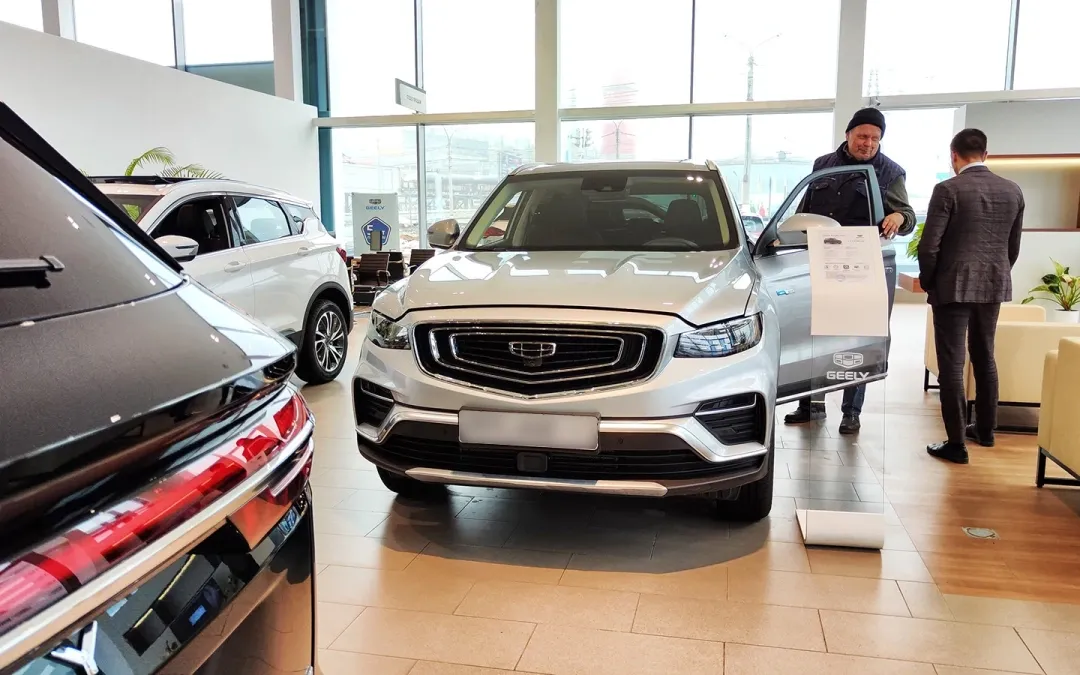
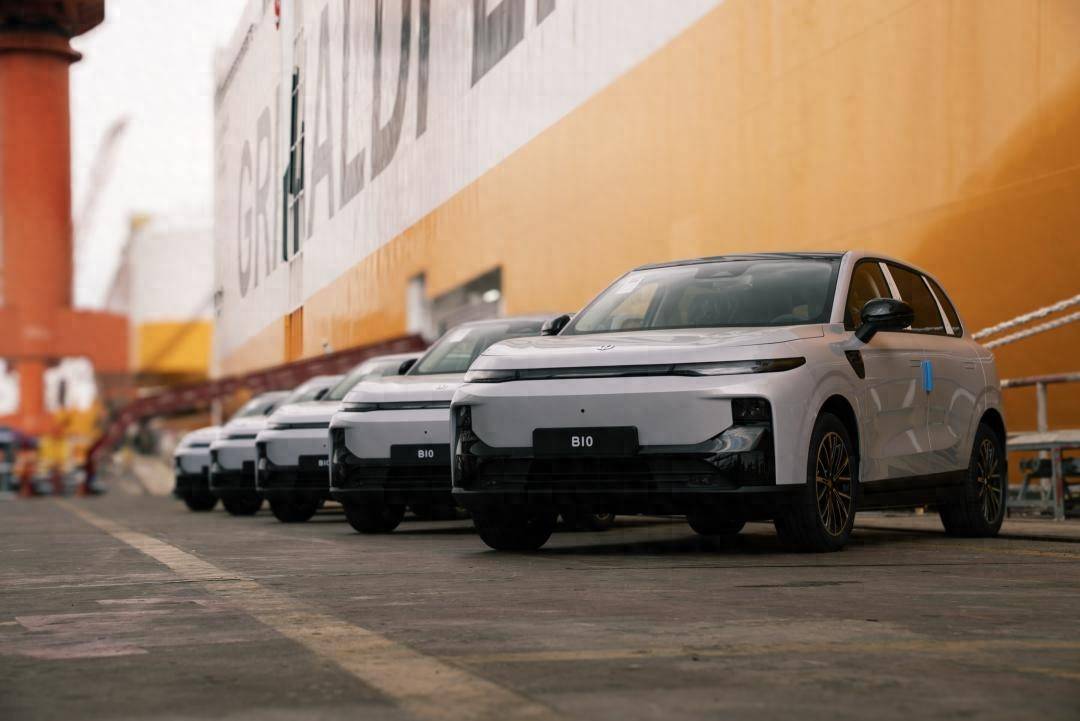
After experiencing rapid overseas expansion from 2023 to 2025, China's New Energy Vehicle (NEV) sector has entered a strategic turning point — shifting from "scale expansion" to "value cultivation." IEA data shows that China's EV exports in 2025 doubled year-over-year to over 2.5 million units, yet export volumes exceeded actual overseas retail sales by more than 25% IEA. This contradiction is rooted in four interlocking core challenges.
4.1 Comprehensive Escalation of Tariffs and Trade Barriers
Since 2024, the world's major markets — represented by the EU, the United States, and Brazil — have constructed an unprecedented tariff barrier system against Chinese NEVs.
EU Countervailing Duties (CVD) have been in effect since October 30, 2024, with combined tariff rates ranging from 17.8% to 45.3% EV China. On January 12, 2026, the European Commission published a procedural framework for a "price undertaking" as an alternative to tariffs BeHorizon.
The absence of U.S. market access is even more thorough. Under the Section 301 framework, the United States has imposed a 100% tariff on China-made EVs since 2024. According to industry estimates, taking a China-made EV with a manufacturing cost of $22,000 as an example, the 100% tariff drives its landed cost up to $52,000 DriveAuthority. In 2026, the five major Chinese mainstream brands recorded zero sales in the U.S.
A wave of protectionism in emerging markets is advancing in parallel. Brazil terminated the 14% preferential tariff on EV CKD/SKD assembly kits in February 2026 Electrive. Turkey raised tariffs on China-made ICE and hybrid vehicles to 50% effective January 2025 AGBI. Mexico also imposed an additional 50% tariff on EVs from China and other Asian countries effective January 2026.
The extension of CBAM to automobiles poses a long-term structural risk. The EU plans to expand the scope of the Carbon Border Adjustment Mechanism (CBAM) to cover automobiles and auto parts starting in 2028 CarNewsChina.
Comparison of Major Trade Barriers
| Market | Tariff Rate | Effective / Key Date | Major Impact on Chinese Companies |
|---|---|---|---|
| EU | 17.8%–45.3% (brand-differentiated) | Final ruling October 2024; price undertaking framework January 2026 | Price advantage narrows; drives local factory construction; SAIC/MG bear the greatest pressure |
| United States | 100% (Section 301) | From 2024, continuing through 2026 | De facto market blockade; five major Chinese brands record zero sales |
| Brazil | Stepped increase to 35% | CKD preferential tariff ended February 2026; rising to 35% in January 2027 | CKD assembly cost advantage disappears; accelerates deep localization |
| Turkey | 60% (50%+10%) | From January 2025 | Protects domestic TOGG brand; BYD secures exemption through investment |
| Mexico | 50% (on Asia-made EVs) | From January 2026 | Blocks the "third-country transshipment" pathway |
| EU CBAM | TBD (carbon border tax) | Planned extension to automobiles in 2028 | Full life-cycle carbon accounting compliance costs rise |
Data as of June 2026; tariff policies are subject to possible adjustment.
4.2 Insufficient Localization Depth: The Gap from "Selling Overseas" to "Putting Down Roots"
The overseas inventory backlog problem is severe. The IEA explicitly notes that the EV export volume reported by CAAM in 2025 exceeded actual overseas sales by more than 25% IEA. Local capacity utilization rates in Southeast Asia are extremely low — Thailand's BEV capacity utilization rate is only about 20%, and Indonesia's is below 15%.
After-sales service network coverage is weak. As of mid-2024, Chinese-brand vehicles accounted for only 0.27% of vehicles in operation in Europe Wolk & Nikolic. In Germany, only 25% of dealerships and repair shops are willing to cooperate with Chinese brands (a significant decline from 38% in 2023) Carscoops.
The reputational risk of quality incidents cannot be ignored. In October 2025, BYD announced its largest-ever recall — totaling over 115,000 vehicles Techstory. Other Chinese brands face similar pressures regarding overseas quality validation and consumer trust; this challenge is not unique to BYD.
4.3 Brand Premium Deficit and Consumer Perception Gap
Consumer perception is improving, but from an extremely low baseline. A Horváth & Partner survey shows that 55% of European consumers indicate willingness to consider purchasing a Chinese-brand vehicle — a 12-percentage-point increase from 43% at the end of 2023, and the proportion of those who "firmly refuse" dropped sharply from 46% to 21% EconoTimes. However, structural divergence is significant: Spain and Hungary have the highest acceptance rates (75%), while Germany stands at only 46%.
Severely insufficient brand awareness is a deeper bottleneck. Among Chinese brands, only BYD — leveraging its UEFA European Championship sponsorship — has achieved 64% brand awareness. MG ranks second at 26%, while Lynk & Co's awareness rate is only 11% after more than five years of sales in Germany. The awareness rates for Deepal, Omoda, and Jaecoo are all below 1% Carscoops.
A significant gap exists in brand-building investment. Most Chinese automakers enter the European market with a "product export" logic — this "substituting products for brands" strategy has limited effectiveness in mature markets with high consumer trust thresholds Wolk & Nikolic.
4.4 Geopolitical and Compliance Risks: Strategic Gaming Amid Rule Reconstruction
Data security and smart vehicle compliance. The EU Data Act has been fully effective since September 2025, explicitly extending the definition of "connected products" to cover smart connected vehicles Deheng Law Firm.
Supply chain traceability and battery regulations. The EU's new Battery Regulation has implemented supply chain due diligence obligations since August 2025. Starting January 2027, Chinese lithium battery exporters must complete Environmental Product Declaration (EPD) registration within six months Luyiss.
Institutionalization of investment screening. On June 8, 2026, the Council of the EU formally adopted the revised FDI Screening Regulation Baker McKenzie. Of even greater strategic impact is the Industrial Accelerator Act (IAA) proposal introduced by the European Commission in March 2026 — specifically targeting countries that control over 40% of global production capacity in areas such as BEVs and battery technology (currently only China qualifies). Chinese enterprises' investments in the above fields exceeding €100 million will trigger a review, and they must satisfy at least four of six conditions ADVANT Beiten.
Note: The interpretations of laws and policies in this section are for reference only and do not constitute legal advice. Please consult professional lawyers for specific compliance matters.
Chapter Summary
The four core challenges do not exist in isolation; rather, they form a mutually reinforcing resistance matrix: tariff barriers intensify cost pressure, forcing companies to build factories overseas; yet overseas factory construction faces the dual constraints of insufficient localization support and FDI screening; the brand perception deficit makes it difficult for companies to absorb costs through premiums; and the upgrading of compliance systems raises the准入 threshold across the entire chain at the institutional level. The transition from "scale export" to "value export" lies not in circumventing barriers, but in systematically building localization capabilities and brand assets sufficient to withstand them.
Related Posts