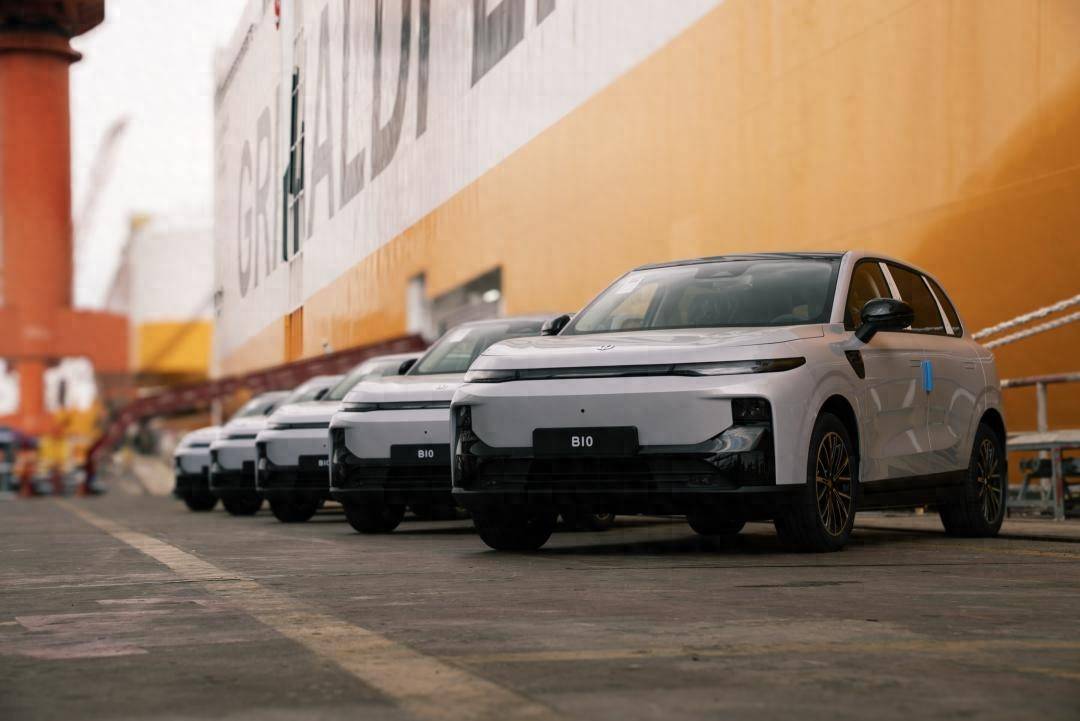
The globalization map of China's NEV expansion is highly concentrated on three strategic-level markets: Europe, where high tariff barriers are driving localization transformation; Southeast Asia, driven by the dual engines of policy subsidies and charging infrastructure; and Latin America, expanding rapidly with Brazil as the anchor. These three play complementary roles in the path of Chinese brand globalization: Europe validates brand premium and compliance capability, Southeast Asia validates cost efficiency and the potential to substitute Japanese fuel vehicles, and Latin America validates the full-chain export model for late-developing markets. This chapter deconstructs each from four dimensions — policy, infrastructure, consumer landscape, and competitive dynamics — and conducts a cross-comparison using a five-dimensional scoring matrix.
2.1 Europe: The Localization Race Under High Tariff Barriers
2.1.1 The EU Countervailing Duty System and Its Differentiated Impact
Effective October 29, 2024, the EU officially imposed countervailing duties on China-made Battery Electric Vehicles (BEVs), adding additional tariffs ranging from 7.8% to 35.3% on top of the existing 10% base tariff, bringing total tax rates to between 17.8% and 45.3% EV China. This tariff system exhibits significant brand-specific differentiation: BYD, which cooperated with the investigation, is subject to a 17% additional duty (27% combined); the Geely group (including Volvo/Polestar/Zeekr) at 18.8% (28.8% combined); other cooperating companies uniformly at 20.7% (30.7% combined); while SAIC Motor (owner of the MG brand), which did not cooperate with the investigation, bears the highest 35.3% additional duty (45.3% combined). Tesla's Shanghai Gigafactory received the lowest 7.8% additional duty (17.8% combined) due to an individual review.
Analysis: The tariff differentials directly shape each brand's strategic option space in Europe. BYD and Tesla's relatively lower rates give them greater flexibility in pricing strategy, while SAIC MG faces a total rate of nearly 50%, forcing a difficult choice between absorbing costs to compress margins and raising prices to protect profitability.
2.1.2 Market Growth and the Price Undertaking Mechanism
Despite high tariff barriers, the growth momentum of Chinese brands in the European market continues. According to Dataforce data, Chinese brands sold approximately 811,000 units (810,982 vehicles) in Europe for the full year 2025, a 99% year-on-year increase, with market share reaching 6.1% ChinaEVHome. MG led Chinese brands with 307,282 units, BYD (including Denza) grew 276% to 186,612 units, and the Chery Group totaled 120,207 units. However, EU local inventory backlogs are severe — according to Rhodium Group estimates, the unsold inventory backlog of Chinese automakers in the EU market has reached record levels, requiring approximately 28 months to absorb at current sales velocities, compared to a normal inventory level of only about 2 months Rhodium Group.
Notably, the BEV tariffs have instead spawned a "hybrid detour" phenomenon: in 2025, exports of China-made hybrid models (PHEV/HEV) to the EU surged approximately 500% BeHorizon. On January 12, 2026, the European Commission and China's Ministry of Commerce reached a procedural framework on the "Price Undertaking" mechanism, allowing automakers to substitute duty payments by committing to sell at no less than a specified minimum price BeHorizon.
2.1.3 Local Factory Construction: From "Exporter" to "Local Producer"
Facing expectations of tariff perpetuation, the strategic focus of leading automakers has shifted from direct exports to localized production in Europe. BYD's Hungary Szeged factory has entered the trial production phase, with a planned annual capacity of 300,000 units Investor's Business Daily, while its Turkey factory is scheduled to commence production in March 2026. Chery has partnered with the Spanish brand Ebro to produce models such as the Omoda 5 at the former Nissan Barcelona factory SRN News. Geely is expanding its operations in the UK.
2.1.4 Infrastructure Support and New Policy Risks
Europe's public charging infrastructure provides a solid foundation for EV adoption. As of end-2024, Europe's total public charging points exceeded 1 million, a year-on-year increase of over 35% IEA. The Netherlands (over 180,000), Germany (160,000), and France (155,000) ranked top three; ultra-fast charging points (≥150kW) grew 60% to 77,000. There is one public charging point for every 13 EVs, and over 75% of the highway network is covered by charging facilities.
However, new risks are emerging. The EU plans to extend the Carbon Border Adjustment Mechanism (CBAM) to automobiles and auto parts starting in 2028 CarNewsChina.
2.1.5 Consumer Landscape: Rapid Reconstruction of Brand Trust but Significant Divergence
European consumers' trust in Chinese automobile brands is undergoing rapid reconstruction. A joint survey by Horváth & Partner and Bernstein of 4,400 European drivers found that 55% of respondents expressed willingness to consider purchasing a Chinese brand vehicle, a significant jump from 43% at the end of 2023; the proportion explicitly refusing to consider dropped sharply from 46% two years ago to 21% EconoTimes. However, there is significant country-level divergence in openness: consumers in Spain and Hungary are the most open (75%), Italy at 64%, while Germany at only 46% EconoTimes.
2.1.6 Competitive Dynamics: Local Brands Accelerating Electrification Counterattack
European local brands are accelerating their electrification counterattack with a dual strategy of price cuts and restructuring. Volkswagen Group launched the ID.Polo compact electric model with a starting price below €25,000 Germany Times. Meanwhile, Volkswagen permanently cut over 700,000 units of annual production capacity in Germany AMS. Stellantis faces an even more severe situation — utilization rates at multiple European factories are below 40%, and production suspensions have been implemented in several locations AMS.
2.2 Southeast Asia: Policy-Driven Growth and Space for Japanese Brand Substitution
2.2.1 Market Size and Growth Drivers
The EV markets of the six ASEAN countries are experiencing explosive growth. According to analysis by the energy think tank Ember, EV sales penetration rates in several ASEAN countries have ranked among the global leaders: Singapore and Vietnam reached approximately 40%, exceeding the UK and EU averages; Thailand reached 21%; and Indonesia reached 15%, surpassing the United States for the first time Ember. Chinese brands account for over half of the market share.
Thailand is the core engine of the Southeast Asian EV market. In the first nine months of 2025, cumulative sales of Chinese brands in Thailand reached 92,913 units, a 75.97% year-on-year increase, with market share breaking through 19.5% for the first time to a historic high Zhineng Auto. Japanese brands' share continued to decline from 86.7% five years ago to 70.6%.
2.2.2 Dual-Engine Drive of Policy Subsidies and Charging Infrastructure
Behind the high growth of the Southeast Asian market lies a systematic policy mix from various governments. Indonesia leverages its advantage as the world's largest nickel reserve holder, using a "nickel ore—battery—vehicle" vertical integration policy to attract CATL, BYD, and others to build battery factories and vehicle production bases locally ANTARA News. Charging points across ASEAN countries grew 62% to 187,000 units Mordor Intelligence.
2.2.3 Substitution Space for Japanese Fuel Vehicles and Strategic Transformation
Southeast Asia has traditionally been called the "backyard of Japanese automakers," with Japanese brands long holding over 80% market share. However, under the electrification wave, Japanese automakers have clearly lagged in pure electric vehicle deployment. Rhodium Group research notes that Suzuki and Subaru have announced the closure of their factories in Thailand Rhodium Group.
However, signs of a Japanese counterattack have begun to emerge. Toyota announced local production of the refreshed bZ4X pure electric SUV in Indonesia Electrive. Honda has also launched a pure electric concept vehicle based on e:Architecture in Thailand.
2.2.4 Consumer Landscape: High Price Sensitivity but Rapidly Rising EV Acceptance
Southeast Asian consumers' vehicle purchase decisions are highly price-driven. Euromonitor surveys show that 59% of consumers in Malaysia and 51% in Thailand are "price-sensitive" Euromonitor. Chinese brand EVs, with terminal prices 20%–30% lower than comparable Japanese fuel vehicles, are reshaping consumers' cost-benefit calculation framework.
2.3 Latin America: Rapid Positioning During the Policy Window
2.3.1 Brazil: The Largest Market and the Most Urgent Policy Transformation
Brazil is the absolute core of the Latin American EV market, selling 286,691 electrified vehicles of various types in 2025, a year-on-year increase of over 60% Latam Mobility. The BYD Dolphin successfully topped Brazil's electric vehicle sales chart Conven.org. Chinese brands collectively supplied 62% of Brazil's imported electric vehicles.
However, Brazil's policy window is closing rapidly. The zero-tariff policy for EV imports implemented since 2015 has been gradually phased out: a 10% tariff was reinstated in January 2024, raised to 25% in July 2025, and will reach 35% in July 2026 Electrive.
BYD's response strategy is to accelerate the localization level of its Camaçari factory in Bahia State, Brazil, planning to transition to full manufacturing in the second half of 2026 and double capacity to 300,000 units Electrive.
2.3.2 Diversification Potential of Secondary Markets
The Latin American EV market is highly concentrated — Brazil and Mexico together account for 80% of regional sales CleanTechnica. But multiple secondary markets are growing rapidly: Mexico sold 96,636 electrified vehicles in 2025 (+38.5%) Latam Mobility; Colombia's EV market share exceeded 10% CleanTechnica; Uruguay's Q4 2025 BEV market share reached 23%, the highest in the region CleanTechnica.
2.3.3 Structural Characteristics and Consumer Landscape of the Latin American Market
Latin American consumer purchasing power is highly stratified — Uruguay's per capita GDP exceeds $18,000, while Bolivia's is below $4,000 Latinometrics. Chinese brands are accelerating the price parity point between EVs and fuel vehicles — in Colombia, models such as the MG S5 have already achieved price parity with comparable fuel vehicles CleanTechnica.
Competitive Landscape Among Chinese Brands: BYD focuses on a dual-track layout of pure electric and hybrid; Great Wall Motor enters the hybrid SUV segment with the Haval H6 PHEV and Tank 300 PHEV; Chery occupies the C/D-segment plug-in hybrid SUV market with the Tiggo SUV family; and MG enters the entry-level market with a low-price SUV strategy iEVChina.
2.4 Cross-Comparison Matrix of the Three Markets
| Evaluation Dimension | Europe | Southeast Asia | Latin America |
|---|---|---|---|
| Policy Friendliness | ★★☆☆☆ | ★★★★☆ | ★★★☆☆ |
| Countervailing duties 17.8%–45.3%, CBAM proposed to extend to automobiles in 2028 | Purchase subsidies + tax exemptions + local factory incentives all in place | Brazil tariffs rising rapidly (to 35%), most countries lack systematic incentives | |
| Charging Infrastructure | ★★★★★ | ★★☆☆☆ | ★★☆☆☆ |
| Public charging points >1 million (+35%), high-speed rail highway coverage >75% | 187,000 units (+62%), fast growth but insufficient in absolute terms | Infrastructure weak except in Uruguay/Chile | |
| Consumer Purchasing Power | ★★★★★ | ★★★☆☆ | ★★☆☆☆ |
| High per capita GDP, 55% of consumers open to buying Chinese brands | Middle-income group expanding but overall purchasing power limited; price is the core decision factor | Large internal regional disparities; overall low purchasing power | |
| Local/Third-Country Competitive Threat | ★★★☆☆ | ★★☆☆☆ | ★★★☆☆ |
| Volkswagen launching ID.Polo below €25,000 counterattack; Stellantis suspending production at multiple plants | Japanese historical advantage significant but pure EV product line weak | Japanese/Korean/European-American brands deeply rooted in fuel vehicle market | |
| Geopolitical Risk | ★★★☆☆ | ★★☆☆☆ | ★★★☆☆ |
| Overall stable China-EU economic relations but increasing frictions | Good economic relations with China; no fundamental geopolitical conflict | Brazil/Mexico China policies generally pragmatic, but subject to US influence |
Scoring Note: More ★ indicates greater advantage for Chinese automakers.
2.5 Chapter Summary
The three target markets provide distinctly different strategic scenarios for China's NEV global expansion: Europe's core contradiction is the tension between high barriers and high value; Southeast Asia's core advantage is the overlap of policy dividends and the Japanese brand substitution window; Latin America's core characteristic is a speed race under a compressing policy window. Overall, the global competitive landscape in 2026 is validating one trend: the core competitiveness of Chinese NEV automakers is shifting from domestic manufacturing cost advantages to the comprehensive capabilities of global supply chain management, localized compliance production, and brand system building.
Related Posts