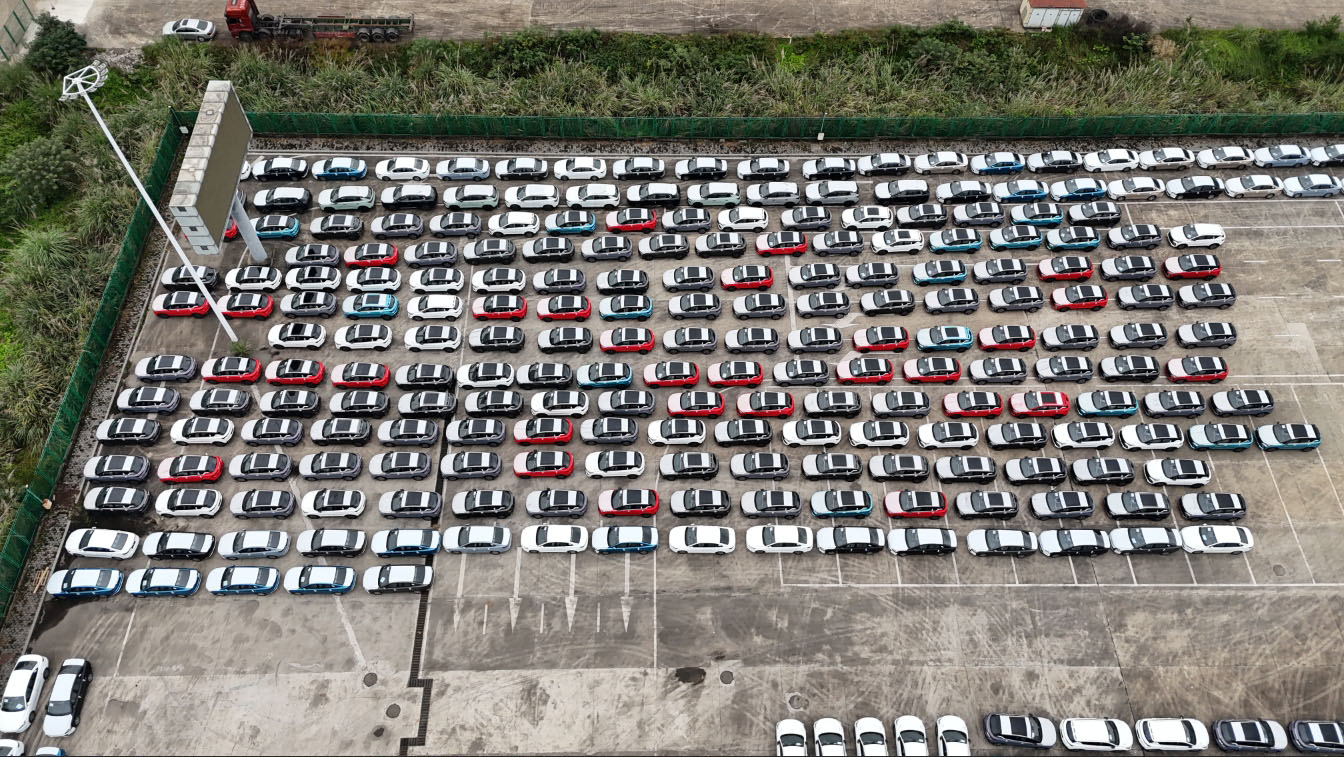
When exporting vehicles to Russia, EAC certification and OTTS certification are two mandatory hurdles that must be cleared. Without these certifications, vehicles cannot be legally registered for license plates in Russia. This article provides a detailed breakdown of both certifications — their scope, process, costs, and key considerations — to help overseas buyers and Chinese exporters navigate this complex landscape.
1. What is EAC Certification?
EAC (Eurasian Conformity) certification is the unified mandatory conformity assessment of the Eurasian Economic Union (EAEU), applicable to Russia, Belarus, Kazakhstan, Armenia, and Kyrgyzstan. Products with EAC certification can circulate freely across all five member states without additional testing.
For vehicles, the EAC certification corresponds to technical regulation TR CU 018/2011 "On the Safety of Wheeled Vehicles," one of the most stringent automotive technical regulations in the EAEU region.
2. What is OTTS Certification?
OTTS (Одобрение типа транспортного средства, Vehicle Type Approval) is a vehicle type approval document issued under the EAC regulatory framework. Each vehicle model must obtain its own OTTS certificate, proving compliance with all EAEU safety and technical requirements.
Simply put: EAC is the regulatory system, and OTTS is the specific approval certificate for a particular model under that system. A vehicle without OTTS cannot be registered for license plates in Russia.
3. Testing Categories Covered by EAC/OTTS
| Test Category | Specific Items | Description |
|---|---|---|
| Emissions | Euro 5/Euro 6 | Required for both petrol and diesel vehicles |
| Noise Limits | Driving/static noise | Not exceeding 74-77 dB (varies by model) |
| Safety Performance | Frontal/side/rear impact | Valid crash test reports required |
| Lighting | Headlights/turn signals/brake/fog lights | Must meet ECE beam pattern requirements |
| Braking | Service/parking brake/ABS | Cold/hot brake effectiveness testing |
| EMC | Electromagnetic compatibility | Ensures onboard electronics don't interfere |
| Material Safety | Interior harmful substances/ELV | Lead, cadmium, mercury limits |
| EV Specific | Battery safety/charging/range | UN R100/R136 regulations |
4. Certification Process & Timeline
Total timeline: typically 3-6 months (expedited processing can reduce to 2 months at significantly higher cost)
5. Cost Overview
| Cost Item | Estimated Cost (USD) | Notes |
|---|---|---|
| Testing fees | 15,000-40,000 | Depends on number of test items and model complexity |
| Factory audit | 5,000-10,000 | Including expert travel |
| Translation & notarization | 2,000-5,000 | Russian translation of technical documents |
| Certification body service | 8,000-15,000 | Project management and issuance |
| Sample vehicle shipping | 3,000-8,000 | China to EAEU lab |
| Total | 33,000-78,000 | Per vehicle model |
2. Purchasing models that already have EAC/OTTS certification saves tens of thousands of dollars and months of waiting. All Shunwei Auto models are already certified — customers can import and register immediately.
3. Since 2025, Russia has tightened supervision of parallel-imported vehicles. We recommend choosing pre-certified models to avoid customs clearance risks.
6. Shunwei Auto's Certification Support Services
- Pre-certified model library: Popular models from Changan, Chery, Haval, Geely, etc. all hold OTTS — no waiting for customers
- SBKTS processing: We arrange SBKTS safety certificates for every exported vehicle, ensuring immediate registration upon arrival
- New model certification assistance: For clients needing to certify new models, we provide end-to-end support from documentation to lab coordination
- Real-time certification status: Customers can check the validity and status of their purchased model's certification at any time
- Compliance consulting: Our expert team answers all questions about EAC regulations, tariffs, customs clearance, and compliance
EAC/OTTS certification is the first and most important gateway to importing vehicles into Russia. Choosing Shunwei Auto means choosing a proven compliance path, ensuring your vehicle import journey starts on the right track from day one.
Related Posts