Twenty years ago, "Chinese automotive design" was virtually nonexistent on the international stage. A decade ago, "Chinese design" was often labeled "imitation." Today, Chinese automotive design has developed highly recognizable design languages that not only win international design awards but have become a key reason overseas consumers choose Chinese brands. This evolution — from imitation to originality, from local to global — is itself a microcosm of the rise of China's automotive industry.
1. Four Eras of Chinese Automotive Design
Era One: Imitation & Learning (2000-2010)
During this period, Chinese auto brands were in their infancy with limited design capabilities. Most brands built their product lines through reverse engineering or hiring foreign designers. While appearances were often criticized as "familiar," this phase accumulated fundamental styling and engineering experience, laying the groundwork for future breakthroughs.
Era Two: International Design Team Building (2010-2016)
Chinese brands began large-scale recruitment of internationally renowned designers. Chery hired former GM designer James Hope, Geely integrated Volvo's design resources after acquisition, and Changan established design centers in Turin, Italy and Yokohama, Japan. During this phase, brands began developing preliminary design identity, though overall styles remained "safe and conventional."
Era Three: Design Language Establishment (2016-2022)
This was the period when Chinese automotive design truly "awakened." Major brands established their own design language systems:
- Changan — "City of Tomorrow" design philosophy, centered on technology and futurism; the large grille and sharp lighting of CS75 PLUS became brand identifiers
- Geely — "Cosmic Resonance" design concept; Xingyue L's ripple-style front fascia and full-width taillights are highly distinctive
- Chery — "Art in Motion" design language; Tiggo series' floating roof and diamond grille became family traits
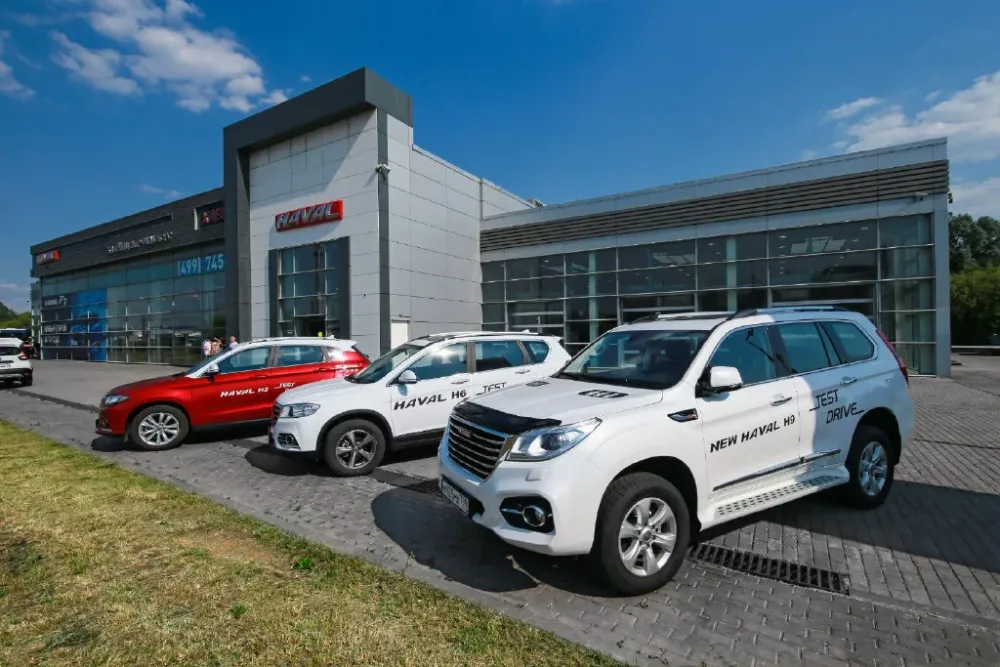
- Haval — "Future Aesthetics" design direction; H6's rugged lines and bold proportions create strong SUV character
Era Four: Global Design Influence (2022-Present)
Chinese automotive design is no longer just "good-looking" — it's starting to lead trends. Full-width taillights, hidden door handles, frameless doors, and floating roofs are often deployed by Chinese brands ahead of international competitors. More importantly, Chinese designers draw inspiration from Chinese culture, infusing "Eastern aesthetics" into modern automotive design — such as Great Wall's "Eastern Zen" interiors and BYD's "Dragon Face" front fascia — creating unique cultural identity.
2. How Overseas Consumers Perceive Chinese Design
| Period | Consumer Assessment | Key Evaluation Words |
|---|---|---|
| Pre-2010 | "Looks like a copy of some car" | Imitation, cheap, unidentifiable |
| 2012-2016 | "Design has improved a lot, but still lacking" | Progress, acceptable, not unique enough |
| 2017-2020 | "Design no longer loses to Japanese/Korean brands" | Stylish, impressive, good value |
| 2021-2023 | "Some designs look better than German cars" | Stunning, tech-forward, exceeds expectations |
| 2024-Present | "Chinese design is leading trends" | Avant-garde, distinctive, culturally rich |
3. Design Globalization: More Than Just "Looking Good"
For export markets, design is not just an aesthetic issue — it directly relates to market adaptability. Chinese brands have made the following efforts in design globalization:
- Climate-adaptive design: Enlarged grille openings for the Russian market to optimize cold-start airflow; dark heat-rejecting glass and reinforced AC vents for Middle Eastern markets
- Regulatory-adaptive design: Headlight beam patterns switchable between ECE/GB modes; enlarged mirror sizes to meet EU blind-spot regulations; repositioned high-mount stop lamps
- Cultural-adaptive design: Interior color schemes adjusted by target market — dark, understated tones for Russia; light, luxurious tones for the Middle East; bright, lively tones for Southeast Asia
- Usage-scenario design: Added underbody protection and increased ground clearance for Central Asian and African road conditions; optimized body dimensions for narrow European city parking
4. Design Awards: International Recognition for Chinese Brands
In recent years, Chinese auto brands have frequently won international design awards, marking global design community recognition:
| Award-Winning Model | Award | Year |
|---|---|---|
| Geely Xingyue L | German iF Design Award | 2022 |
| Changan UNI-V | German Red Dot Award | 2023 |
| Chery Tiggo 8 PRO | Japan Good Design Award | 2023 |
| Haval H6 | Australian Design Award Finalist | 2024 |
| Changan CS75 PLUS | IDA International Design Award | 2024 |
5. Shunwei Auto's Design-Based Selection Advice
Different markets have different design preferences. Based on export experience, Shunwei Auto recommends:
- Tech-forward aesthetic: Changan CS75 PLUS, Geely Xingyue L — sharp lines and futuristic lighting suit younger consumers
- Understated elegance: Haval H6, Toyota Camry — classic proportions and restrained design suit business and family users
- Individual style: Chery Tiggo 7 — floating roof and dynamic body suit urban youth
- Practical reliability: Lingshi commercial vehicle series — function-driven design emphasizing durability and efficiency
The rise of Chinese automotive design represents the transformation from "building a car" to "building a car that moves people." When overseas consumers see a Chinese car for the first time and say "Wow," design has fulfilled its most important mission — opening perception, building trust, and creating desire.
Related Posts