From Catching Up to Leading the Way: The Rise of China's Automobile Exports
In 2025, China officially surpassed Japan to become the world's largest automobile exporting nation. Behind this historic milestone lies more than two decades of transformation within China's automotive industry — a journey from quantitative growth to qualitative leadership. From Chery's pioneering vehicle export shipments in 2001 to today's annual exports exceeding six million units, China's auto export sector has evolved from simple trade into a comprehensive, full-chain technology export powerhouse. Shunwei Auto, as both a participant and a facilitator of this transformation, has witnessed firsthand the profound shift from "manufacturing" to "smart manufacturing."
A Historical Perspective: Two Decades of Leaps
The period from 2001 to 2010 marked the exploratory phase of China's auto exports. Vehicles were predominantly low-cost models shipped mainly to developing markets in the Middle East, Africa, and Southeast Asia, with an average export price below US$8,000 per unit. From 2010 to 2020, brands such as Chery, Geely, and Great Wall began entering more demanding markets including Russia and South America, progressively improving product quality and establishing after-sales service networks.
Since 2020, the industry has entered an era of intelligent disruption. The rise of new energy vehicles (NEVs) has fundamentally reshaped the competitive landscape. Brands like BYD, NIO, and XPeng have leveraged their advantages in electrification and intelligence to successfully penetrate developed markets in Europe and Australia. In 2024, China's total auto exports reached 5.859 million units, of which 1.724 million were NEVs — a 67% year-on-year increase. In 2025, this figure continues to climb, with annual exports projected to surpass 6.2 million units.
Manufacturing Upgrades: From Simple Assembly to Full-Chain Technology Export
In the early days, Chinese auto exports relied primarily on CKD (Completely Knocked Down) and SKD (Semi-Knocked Down) models — essentially shipping component kits overseas for local assembly. Today, the export model has evolved into a full-chain technology transfer encompassing vehicle design, core component supply, production process standards, and quality assurance systems. Chery's factory in Barcelona, Spain, for example, not only produces complete vehicles but also introduces Chery's quality control standards, production workflows, and supply chain management systems directly into the European market.
This upgrade means Chinese automakers are no longer simply "selling cars" — they are exporting an entire industrial capability. From stamping, welding, and painting to final assembly; from chassis tuning and NVH optimisation to EMC testing and whole-vehicle reliability validation, Chinese manufacturers have established a comprehensive, advanced R&D and production system.
Intelligent Transformation: Technology as the Core Competitive Edge
Intelligence is the single most important competitive advantage driving China's auto exports. Today, smart cockpit features are standard equipment on exported Chinese vehicles — large central displays, fully digital instrument clusters, voice interaction, and remote smartphone control are available on models priced from around US$14,000. The installation rate of Level 2 and above advanced driver-assistance systems (including adaptive cruise control, lane-keeping assist, and automated parking) has exceeded 60%. OTA (Over-the-Air) update capability allows vehicles to continuously evolve, keeping software current throughout their lifespan.
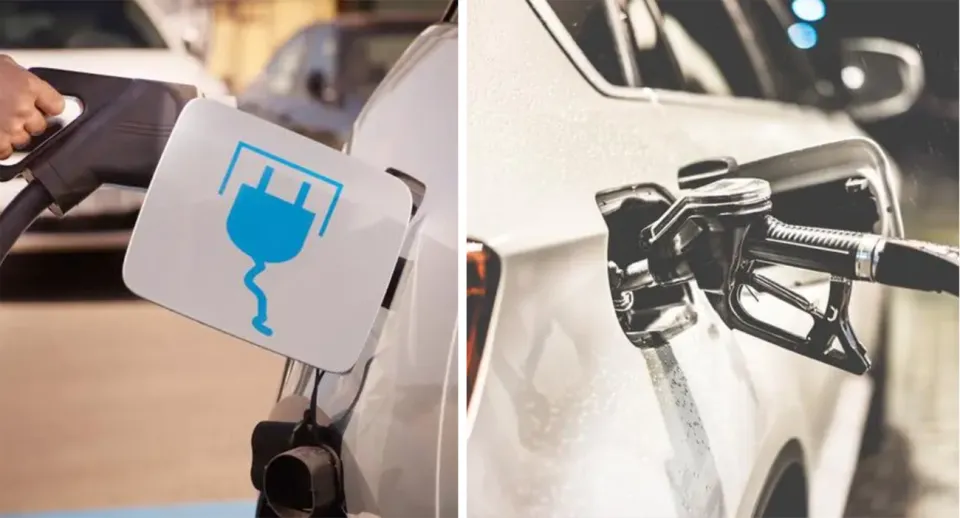
In the new energy segment, Chinese automakers enjoy an even more pronounced technological lead. Blade battery technology, CTP (Cell-to-Pack) battery systems, 800V high-voltage architectures, and silicon-carbide electric drive systems place Chinese NEVs at the global forefront in range, charging speed, and energy efficiency.
Brand Ascendancy: From Unknown to International Stage
BYD has built a powerful global brand presence in the NEV market, with overseas sales surpassing 400,000 units in 2024 across more than 70 countries and regions. Chery, through deep market cultivation in Russia, Brazil, Chile, and other key markets, has consistently ranked first among Chinese brands in export volume. Geely has rapidly elevated its international profile through strategic investments — acquiring Volvo and taking a stake in Mercedes-Benz parent company Daimler. Changan, Great Wall, and SAIC have also made significant strides in their respective stronghold markets.
Supply Chain Strength: Vertically Integrated and Self-Reliant
China's automotive industry has developed the world's most complete supply chain for new energy vehicles. From upstream lithium and cobalt resource development, through the four critical battery materials — cathode, anode, separator, and electrolyte — to the three core components of the powertrain: battery packs, drive motors, and motor control units, Chinese companies possess robust, self-sufficient supply capabilities at every stage. CATL and BYD's FinDreams Battery together command over 60% of the global power battery market.
Global Footprint: From Product Export to Localised Production
As export volumes have grown, an increasing number of Chinese automakers are establishing localised production facilities overseas. Chery operates plants in Spain, Brazil, and Egypt; BYD is building production bases in Thailand, Hungary, Brazil, and Turkey; Great Wall runs full-process vehicle factories in Thailand and Tula, Russia; and SAIC maintains manufacturing sites in India, Thailand, and Indonesia. Localised production not only reduces tariff costs but also brings manufacturers closer to local consumer preferences, strengthening brand affinity.
The Shunwei Auto Perspective: Helping Overseas Clients Seize the Dividends of Smart Manufacturing
As active participants in China's auto export industry, Shunwei Auto understands the pain points overseas clients face — information asymmetry, opaque channels, and complex procedures. We are committed to building a bridge between China's premium automotive resources and global demand. From model recommendation and specification selection to price negotiation, export documentation, international logistics, and destination-port customs clearance, we provide end-to-end professional services. Whether you are interested in new energy vehicles or conventional models, whether your order is a single unit or a fleet of hundreds, Shunwei Auto delivers the most efficient and transparent export solution, enabling you to effortlessly benefit from China's smart manufacturing revolution.
Related Posts