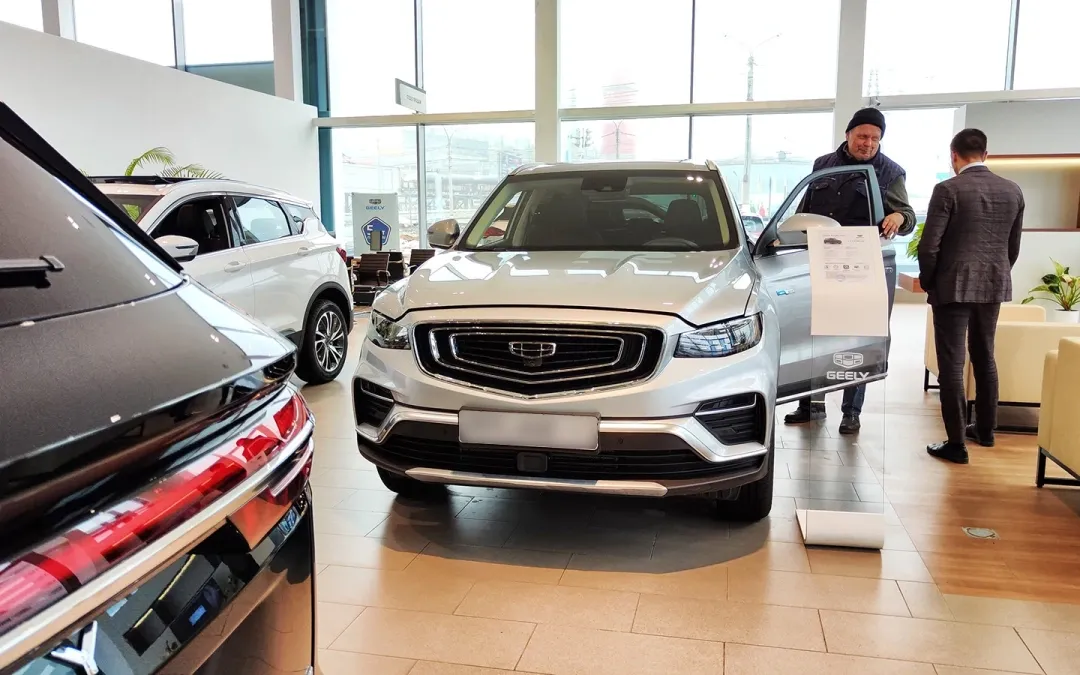
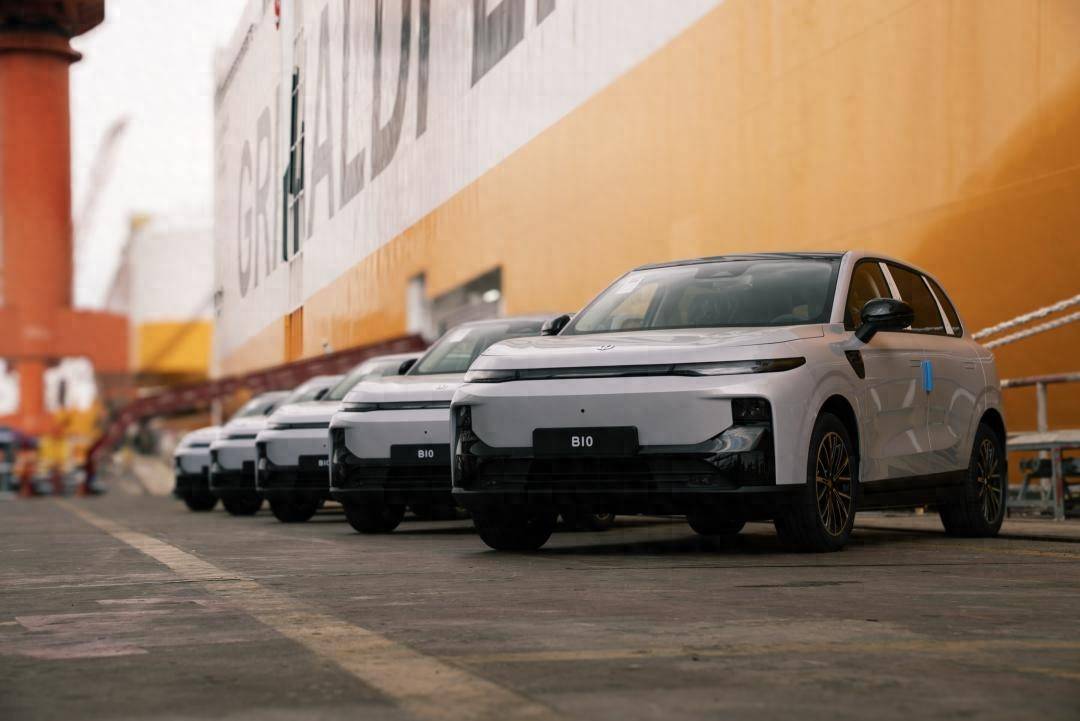
Since 2024, sales of Chinese new energy vehicles (NEVs) in the Russian market have experienced explosive growth. According to Russian automotive analytics agency Autostat, Chinese brands now hold over 70% of Russia's NEV market share. Behind this phenomenon lies the combined driving force of multiple factors. This article provides an in-depth analysis from three dimensions: market environment, product competitiveness, and consumer trends.
1. Market Environment: The Enormous Vacuum Left by Western Brand Withdrawals
Since 2022, due to international sanctions and supply chain disruptions, Western and Japanese-Korean automotive brands such as Toyota, Volkswagen, Mercedes-Benz, and BMW have significantly scaled back or completely withdrawn from the Russian market. This structural shift has created unprecedented market opportunities for Chinese automotive brands.
Key Data: In 2025, Russian new car sales reached approximately 1.5 million units, with Chinese brands accounting for over 55% — a leap from less than 10% in 2022. In the NEV segment, Chinese brands' share exceeded 70%.
Russia's domestic auto industry has partially recovered, but production capacity remains limited, and there is a notable technology gap with China in new energy vehicles. This has provided enormous market space for Chinese NEVs to enter.
2. Product Competitiveness: Core Advantages of Chinese NEVs
1. Overwhelming Price Advantage
Chinese NEVs are typically priced 40%-60% lower than European brands with equivalent specifications. For example, a mid-size pure electric SUV from a Chinese brand is priced at approximately 3-4 million rubles (about ¥250,000-330,000) in Russia, while a comparable European brand cost 5-7 million rubles before sanctions. This enormous price gap makes Chinese brands the rational choice for consumers.
2. Leading Technology Levels
- Battery Technology: Chinese battery companies like CATL and BYD are global leaders in energy density, fast-charging technology, and low-temperature performance. Russia's harsh winters demand reliable battery thermal management, and Chinese brands' systems effectively maintain range performance even at -30°C.
- Smart Cockpits: Large touchscreens, voice interaction, and OTA updates have become standard features in Chinese NEVs, while these remain premium-exclusive options in many European and American brands.
- Range: Mainstream Chinese pure electric models now achieve 500-700 km (CLTC) of range, fully meeting the demands of Russian urban commuting and medium-to-long-distance travel.
3. Adaptive Design for the Russian Market
Chinese automakers have made extensive localization adaptations for the specific needs of the Russian market:
- Cold Climate Package: Enhanced seat heating, steering wheel heating, battery preheating systems, and windshield defrosting.
- Raised Chassis: Increased ground clearance for Russian road conditions on select models.
- Russian Localization: Full Russian language support in infotainment systems and navigation maps covering all of Russia.
3. Consumer Trends: Fundamental Shift in Russian Consumer Perception
1. From "Cheap Substitute" to "Quality Choice"
Early on, Russian consumers perceived Chinese cars as "cheap and low-quality." However, as large numbers of Chinese brands entered the market and accumulated positive word-of-mouth through actual use, consumer perception has undergone a fundamental shift. Increasing numbers of Russian car owners are sharing positive experiences on social media and automotive forums, creating significant word-of-mouth effects.
2. Government Policies Driving Electrification
Although Russia has not set an explicit deadline for banning internal combustion engine vehicles, it has introduced several policies encouraging EV development:
- Zero-tariff preferences for imported electric vehicles (select models)
- Construction of charging infrastructure in major cities including Moscow and St. Petersburg
- Subsidies for locally produced electric vehicles
3. Hybrid Models Become the Most Popular Transition-Period Choice
Due to Russia's incomplete charging infrastructure, pure electric vehicles face usage scenario limitations. Plug-in hybrid (PHEV) and hybrid electric (HEV) models, with their "gas or electric" flexibility, have become the most popular NEV category among Russian consumers in the current stage. Chinese brands' rich hybrid product lineup precisely meets this market demand.
4. Future Outlook
Looking ahead to 2026-2028, Chinese NEVs in the Russian market still possess strong growth momentum:
- Western brands are unlikely to return at scale in the short term, and the market vacuum persists
- Russia's charging infrastructure is accelerating, and pure EV acceptance will gradually increase
- Chinese automakers' localization efforts will further reduce costs and prices
- Russian consumer trust in Chinese brands continues to strengthen
Shunwei Auto is deeply rooted in the Russian market, maintaining close partnerships with multiple major Chinese automakers, and can provide Russian buyers with end-to-end service from vehicle selection and export to after-sales support. Whether you need pure electric, hybrid, or gasoline vehicles, we can provide the optimal solution.
Related Posts